Some mainboards have very few PCI-e slots.
I ended up with a similar adapter because the onboard SATA on my board was flaky with optical drives and I rip CDs.


Some mainboards have very few PCI-e slots.
I ended up with a similar adapter because the onboard SATA on my board was flaky with optical drives and I rip CDs.
We have an entire universe (from snaps up to univere-scale k8s setups) derived from “it works on my machine, so we’ll ship my machine”.
How much bad software isn’t being shook out because it’s kept alive in a container with just the right dependencies to prevent it from activating bugs and bad assertions?
What problem does CSD solve? I’d think “some apps look and work differently” is a pretty bad tradeoff for “I want to cram custom stuff in the title bar which was more or less universally treated as owned-by-the-system for the first 35 years of GUIs at least?”
GTK/GNOME seem to be making themselves actively hostile towards customization, which seems a great way to lose enthusiasts.
I believe the huge mistake in HTML wasn’t having some sort of element-level addressability.
People went insane over “the page flashes for 15ms because we have to reload the header and footer and it doesn’t look NAAATIVE!” and the response was to SPA/AJAX everything, inviting a huge Turing-complete nightmare of possibilities when 95% of what peopleneed would be delivered with < form action=“blah” replace_with_response=“#foo” >
That and a dearth of native widgets-- a < combobox > and a < menu > that worked like the system menus might have kept JavaScript as the sick oddity it should be.
Grok went into a new conspiracy k-hole?
XFCE’s old panel was a distinct mimic of CDE’s. I liked it…
But now CDE is open source and NsCDE gives you the same look with a highly customised fvwm config if you don’t want to stick to the Motif universe.


Try RiscOS for a glimpse of a world most of us missed.


Fre:ac seems to run in a wine package.


Not to mention I bent all the pins on my Cyrix MII ttying to get it in that stupid socket.
I understand pre-OS X Macintoshes used colons.


I’m hoping for MacroSD. About the size of a 3.5" floppy so you won’t lose it easily.
Seriously, it’s interesting that now that we have the tech to make a useful-capacity storage device the size of a credit card, we don’t. Not like those crappy giveaway flash drives printed with a card design, where they had a captive USB head and were 4x as thick as a card, but something with just contacts like a chip card, so you might need to use an external reader but it really preserves the wallet-size concept.
I’d love to have a cheap 16GB card in my wallet with all my health records and a cryptographically signed copy of my will as a one-stop, no cloud required, emergency kit.


If you have a LS-120, it will eject the floppy disc like you were on dome fancy-pants Macintosh!


Sigil of Motif (rare)
Warhammer of cfdisk (common)


I tried pulling in the theming from there, and while it works miracles, I still want to do the three-headed dragon meme:
There are a few other “Solaris 9” and “Perl Tk” lookalike themes that also come close, but they’re all sabotaged by GTK’s lack of bitmap font support (The old bitmap Helvetica is my go-to UI font)


Heads will roll if my LS-120 drive stops working!


Coherent theming, although you’ve hardly had that since Windows 98.
I’ve applied themes to make Xaw, Qt, and GTK software more Motif-like, but the GTK ones seem spotty and the Qt theme doesn’t work for Qt6, and fonts are inconsistent.
I always figured BSD should lean into the daemon imagery with a full heavy-metal branding: a suite of wallpapers with decidedly less cuddly daemons, a succubus OS-tan character… make it the go-to Edgelord Desktop.
Then FreeBSD introduced that stupid sphere logo. No sense of branding. :P


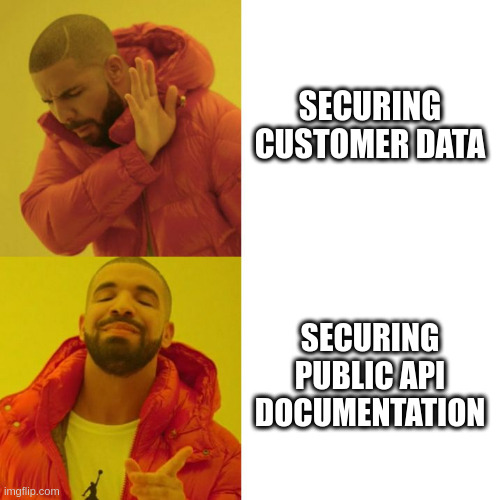
No, this is a general practice-- I see it a lot with third-party vendors who want you to integrate with their services. They’ll expire the documentation portal password after 90 days, but the actual user facing service still accepts the same “password123” that’s been set since 2004.
I suspect the pattern is to protect the vendors from developer scrutiny: by the time you’ve jumped through enough hoops to read the docs and realize it’s trash, the execs have signed the contracts and the sunk costs are too high to bail out.
Also add another 6 months to actually get the credentials for the test environment.
I guess I was startled when I went for my go-to desktop (fvwm) and it wasn’t in the main repo, but the AUR.
It feels like it means they’re not actually maintaining a lot of their package pool, just tossing it off on third parties.
Floats for currency in a payments platform.
The system will happily take a transaction for $121.765, and every so often there’s a dispute because one report ran it through round() and another through floor().